




Multifamily marketing loves motion. Campaigns launch. Reports circulate. Dashboards refresh on schedule. And yet many teams still struggle to explain why leasing outcomes feel disconnected from all that activity.
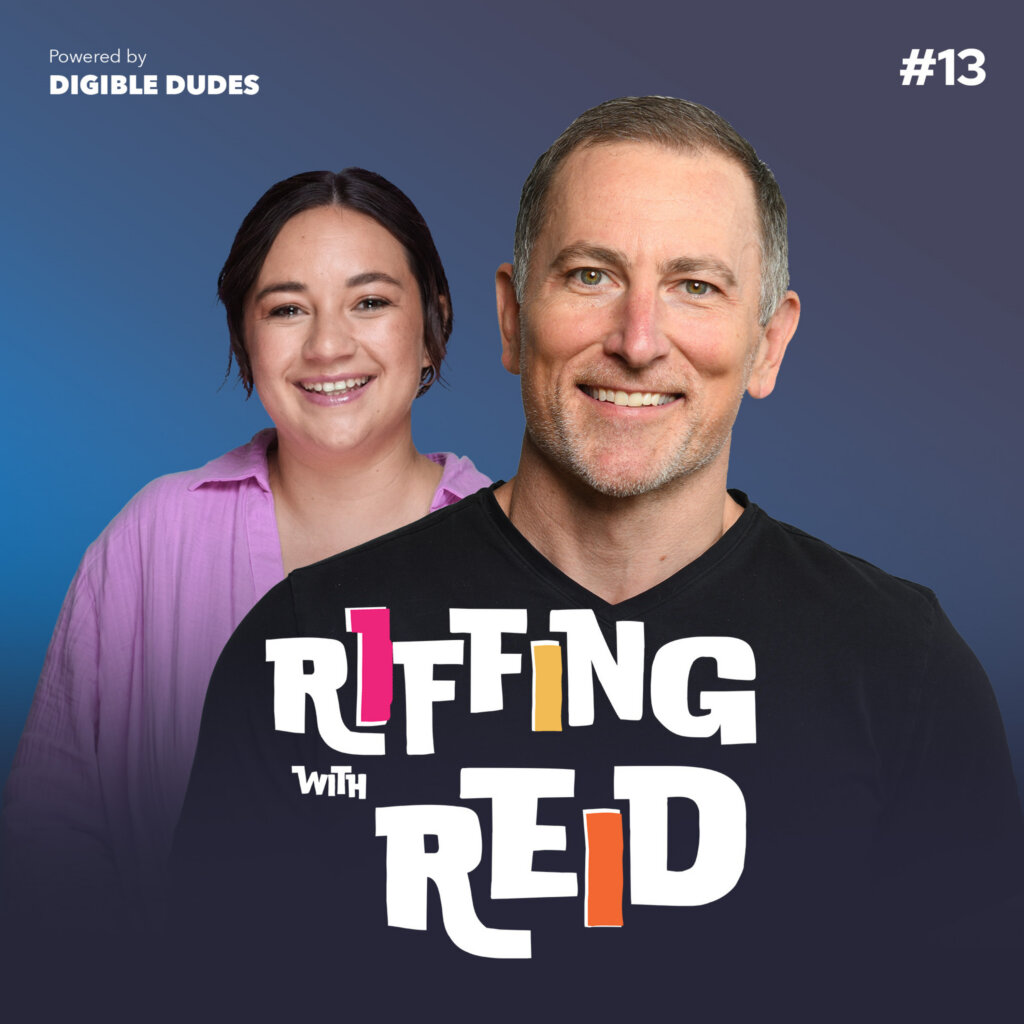
In this episode of Riffing with Reid, Digible founder and CEO Reid Wicoff delivers a candid walkthrough of the multifamily marketing principles that matter most right now. Framed through a Start, Stop, Continue lens, the conversation blends practical strategy with hard-earned industry perspective.
This episode is equal parts actionable playbook and reality check for marketers, operators, and anyone tired of confusing effort with impact.
Why Defining Failure Is the Foundation of Multifamily Marketing Strategy
Before teams define success, they need to define failure. That step is skipped more often than most marketers want to admit.
Reid emphasizes that without a shared definition of failure, performance conversations become subjective and reactive. Metrics get reframed after the fact. Goals quietly shift.
As Reid says, “If you cannot articulate what failure looks like, you are going to struggle to know whether you are succeeding.”
Clear failure criteria create alignment. They eliminate ambiguity. And they give marketing teams a stable reference point when it is time to evaluate results and make changes.
Why Multi Touch Attribution Creates More Confusion Than Clarity
Multi touch attribution promises precision. In practice, it often delivers debate.
Reid challenges the industry’s tendency to chase increasingly complex attribution models in hopes of uncovering certainty in renter behavior. Renters do not move in straight lines, and attribution models rarely capture reality cleanly.
As he notes, “We end up spending more time arguing about attribution than acting on the data.”
When marketing teams optimize for attribution models instead of business outcomes, decision making slows and performance suffers. Simpler frameworks create space for action.
Stop Obsessing Over Marketing Fees and Start Measuring Return on Ad Spend
Fee comparison is one of the most misleading shortcuts in multifamily marketing.
Reid calls out the habit of evaluating marketing partners primarily on cost rather than performance. Lower fees can feel responsible, but they often hide underperformance or missed opportunity.
As he puts it, “A cheap fee with bad outcomes is still expensive.”
The more useful question is not how much something costs, but what it delivers. Return on ad spend and leasing impact should always outweigh line-item savings.
Why Website Design Should Never Come Before Conversions
Brand expression matters. Conversion matters more.
Reid points out that many multifamily websites prioritize visual polish over renter usability. The result is a site that looks impressive but quietly undermines leasing performance.
He explains, “If your website is beautiful but does not convert, it is not doing its job.”
Clear navigation, fast load times, and intuitive calls to action consistently outperform visual sizzle when the goal is leasing velocity.
Treating SEO as a Strategy Instead of a Checkbox
SEO still gets treated like a task to complete rather than a channel to build.
Reid stresses that meaningful SEO performance requires sustained effort, smarter content, and patience. It is not something that works through one-time optimization or sporadic updates.
As he says, “SEO is not something you do once. It is something you commit to.”
Properties that approach SEO as a long-term investment see compounding returns that paid channels alone cannot replicate.
Why Smarter Content Outperforms More Content
Content volume is easy to increase. Content quality is harder to improve.
Reid challenges multifamily marketers to raise the bar on what they publish. Content should answer real renter questions, support SEO goals, and reinforce credibility.
As Reid explains, “Make your content smart enough that it earns attention instead of begging for it.”
When content is genuinely useful, it strengthens multiple channels at once, from organic search to onsite conversion.
Opening Up Data to Improve Marketing Decisions
Better decisions come from better visibility.
Reid encourages marketers and operators to be more transparent with performance data, operational context, and outcomes. When data flows freely, teams collaborate more effectively and optimize faster.
As he notes, “The more open you are with data, the faster everyone gets smarter.”
Data silos protect no one. Shared insight drives improvement.
What Multifamily Marketers Should Continue Doing in 2026
Not everything needs to change.
Reid highlights several areas where marketers should keep pushing forward, including deeper platform integrations, asking harder questions about performance, and rethinking ILS strategies with greater intention.
As he puts it, “The goal is not to do more. It is to do fewer things better.”
Refinement beats reinvention when it is grounded in performance.
The Bottom Line
Multifamily marketing does not fail because teams lack tools or channels. It fails when effort replaces focus and complexity replaces clarity.
Define failure early. Simplify measurement. Prioritize outcomes over optics. Invest in smarter content, transparent data, and disciplined strategy.
This episode of Riffing with Reid is a reminder that effective multifamily marketing is not flashy. It is intentional. And it works when teams stop chasing signals and start committing to principles.
If you want the full conversation, listen to this episode of Riffing with Reid:
🎧 Spotify | 🎧 Apple Podcasts | ▶️ YouTube
Follow along as Reid continues his mission to document the multifamily marketing principles the industry actually needs.