




Student housing requires a different marketing approach than traditional multifamily apartments. Between a unique leasing cycle and an audience that prioritizes affordability, location, and flexibility, student renters come with their own set of expectations.
Today’s students are researching apartments across multiple digital channels, comparing amenities, and weighing proximity to campus and nearby attractions, all from their mobile devices. To stay competitive, marketers need to evolve right along with them. Below are four essential tips to help strengthen your student housing marketing strategy and attract the right renters at the right time.

Student Housing Leasing Phases and Recommended Marketing Channels
Student housing trends change quickly, sometimes faster than a syllabus update. While the pace can feel daunting, running successful campaigns does not have to be complicated. Understanding the student housing leasing cycle provides a clear framework for campaign planning, budgeting, and execution.
Digible’s approach focuses on continuous testing, granular targeting, and data-driven decision-making to reach prospective renters when they are actively searching. The goal is simple: turn interest into signed leases by aligning strategy with how students actually shop for housing.
Leasing Considerations
Leasing typically begins around two months after move-in. Renewal rates are influenced by class rank of prior residents and university enrollment trends, especially for properties affiliated with a campus.
- Renewal Rumble: October to December (Q4). This is when many students begin thinking about housing for the next academic year. Getting in front of them before they head home for the holidays helps keep your property top of mind.
- We Recommend: SEO, Paid Social, and Display.
- Preleasing Push: January to April (Q1). This is the most critical leasing period of the year, with the majority of the annual marketing budget focused on conversion-driven campaigns. The goal is to be fully leased by the end of March for August move-ins. Messaging should spotlight amenities, resident events, leasing specials, proximity to campus, and roommate matching when applicable.
- We Recommend: Paid Search, Paid Social, and Geofencing, especially for open house events.
- Home Stretch: April to August (Q2). This is the final push to lease remaining units before the upcoming school year. Think urgency, availability, and making the decision as easy as possible.
- We Recommend: Paid Search and Social Lead Generation.
- Move-In Season: August to September (Q3). Once students have secured housing and move-ins are underway, the focus shifts to maintaining a strong organic presence and protecting your online reputation.
- We Recommend: Reputation Management, Ad-Watch monitoring of paid ad comments, and Organic Social Media.
4 Essential Tips to Strengthen Your Student Housing Marketing Strategy
#1 Market Study-Life Balance Amenities for Students
Luxury amenities used to steal the spotlight, but today’s students are more focused on health, wellness, and functionality. Sure, a flashy movie room is fun, but reliable high-speed internet and a quiet place to study often win the popularity contest.
Large study lounges and multipurpose flex spaces give students the flexibility to buckle down or socialize, depending on the day. After hours of studying, access to a fitness center or yoga studio is exactly what many students need to decompress.
When marketing your property, focus on how your amenities support both academic success and everyday life. Balance is the real luxury now.
#2 Reach Gen Z Renters Through Mobile-First Marketing
Gen Z renters are not big fans of phone calls. Texting, on the other hand, is very much their language. Providing a text-enabled phone number for tours and inquiries makes it easier for students to engage on their terms.
Virtual tours on your website and social channels also meet expectations for convenience and flexibility. Following up via text after a tour keeps the conversation going and helps move prospects closer to signing a lease.
You may not get a callback, but a well-timed text can do the trick.
#3 Promote Proximity to Campus and Local Points of Interest
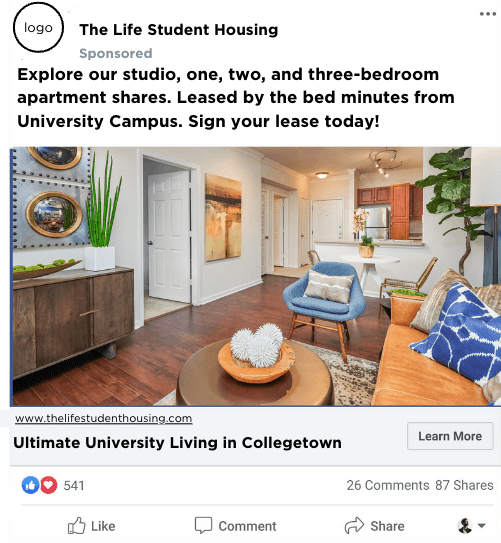
Amenities matter, but location often seals the deal. Students spend a lot of time outside their apartments, whether they are heading to class, meeting friends, or attending campus events.
Be sure to clearly communicate:
- Distance to campus, such as “five minutes from campus,” because no one wants to sprint across campus after hitting snooze one too many times
- Fair Housing compliant language across all marketing materials. If you are unsure, Digible’s Fair Housing Tool can help monitor your digital footprint
- Transportation options, including bike storage, scooters, public transportation, and rideshare access. Linking to transit maps and ticketing information is always a crowd-pleaser
- Nearby events and attractions, such as stadiums, arenas, and campus hotspots that make student life more fun
A strong location story helps students picture what life at your property actually looks like.
#4 Build a Student Housing Marketing Strategy Around the Academic Calendar
When it comes to student housing, timing is everything. Marketing campaigns should align with the university calendar, with budgets allocated based on leasing phases rather than guesswork.
By optimizing your strategy around enrollment cycles, seasonal demand, and student behavior, you can reach Gen Z renters when they are most engaged and ready to convert.
Student housing may come with its own set of challenges, but with the right strategy in place, it can also be a major opportunity.
Connect with Digible for your Student Housing Marketing Strategy
Have questions or need support with your student housing marketing strategy?
Reach out to us at hello@digible.com and let’s make this your strongest leasing season yet.