





The Lease-Up Reporting Problem: Uncertainty Breeds Mistrust
If you are in the middle of a lease-up, you already know the question that makes your stomach drop.
“How’s the lease-up performing?”
It is not that you do not have an answer. You have dashboards, lead counts, traffic numbers, and campaign notes. The problem is that when those updates turn into vague explanations or gut feelings, confidence starts to slip on both sides of the table.
When marketing updates rely on vague trends or best guesses, trust erodes quickly.
Ownership does not just want numbers. They want clarity, confidence, and most importantly, they want to know there is a plan.
“Leads are a little soft, but we think it’s seasonal.” This sounds like guessing. Not strategy.
The stress here is real. You are balancing aggressive occupancy goals, tight timelines, and leadership teams who expect answers, not caveats. Without the right framework, even solid marketing performance can sound uncertain.
From Guessing to Guiding: The Metrics That Actually Matter
Marketing managers often feel pressure to report everything. Clicks, impressions, leads, tours, leases. All at once. All the time.
But not all metrics matter equally at every stage of a lease-up. And trying to make them all matter at once usually creates more confusion, not more confidence.
Lease-ups are not linear. What success looks like today is different from what success looks like next month or three months from now.
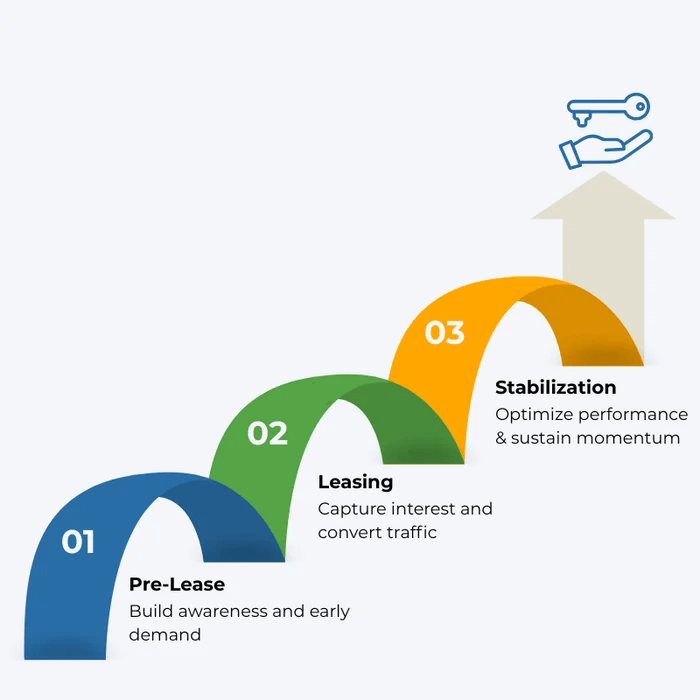
This is where reporting starts to feel more strategic.
Instead of asking, “Are leads up or down?” the better question becomes, “Are we seeing the right signals for this phase of the lease-up?”
Key performance indicators that actually move the conversation forward include:
- Cost per lead versus cost per lease. Early on, cost per lead is often the right focus. As occupancy builds, cost per lease becomes more relevant. Explaining this shift shows intention, not inconsistency.
- Lease velocity. How quickly prospects move from lead to lease helps ownership understand momentum, not just volume.
- Lead source quality. Showing which channels drive tours and signed leases reframes marketing spend as an investment, not an expense.
- Awareness-building versus conversion-driven tactics. Early-stage awareness campaigns are not supposed to close leases immediately. Their job is to build demand that converts later.
Digible helps multifamily teams align goals to each lease-up phase and create stage-specific dashboards that clearly show progress, context, and what comes next.
Translating Strategy into Confidence: How to Communicate with Ownership
The difference between “I think it’s working” and “Here’s why we’re on track” is everything.
Ownership thinks in outcomes: revenue, occupancy, risk. Your role is to connect marketing performance to those outcomes in a way that makes sense to them.
That means:
- Tying marketing metrics directly to revenue impact
- Connecting current spend to future occupancy gains
- Presenting challenges as strategic pivots, not failures
Defensiveness signals doubt, even when results are trending in the right direction. Confidence comes from having both the data and the narrative ready.
Most multifamily marketers actually do know the answer. They just need support turning that answer into a clear, leadership-level story.
This is where having a multifamily digital marketing partner matters. Digible equips you with the data, benchmarks, and insights you need so your updates sound confident, prepared, and intentional.
Let’s Take Ownership of Your Next Update Call
You should not have to second-guess every ownership update or hope the numbers speak for themselves.
Book a Lease-Up Strategy Call
Stop second-guessing your updates. In just 30 minutes, we will walk through your current performance and help you reframe it for ownership so your next call sounds like leadership, not guesswork.
Ready to feel more confident in your next update? Get a lease-up strategy built for your property.needs.