





AI search is entering a new phase. With OpenAI beginning to test ads in ChatGPT for U.S. users on select tiers, the conversation is shifting from what this product is to how it may influence discovery, trust, and decision-making.
For multifamily marketers, the real question is not whether this becomes a must-buy channel tomorrow. It is how AI-driven discovery is changing the way renters express intent and what that means for capturing demand earlier in the journey.

How AI Search Is Changing Multifamily Renter Discovery
When renters search for apartments, they are not just looking for availability. They are evaluating tradeoffs, weighing priorities, and trying to understand how a place fits into their life.
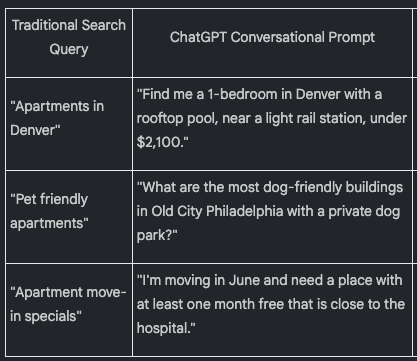
AI-powered search reflects that behavior. Instead of typing short keyword phrases, renters are asking nuanced, conversational questions about neighborhoods, affordability, lifestyle, and long-term value. These moments surface intent well before a listing page is ever involved.
That shift creates an opportunity to influence consideration earlier, when preferences are still forming and decisions are flexible.
What This Means for Multifamily Demand Capture
According to OpenAI, ads are clearly labeled, appear at the bottom of responses, and only surface when there is contextual relevance to the conversation. They are adjacent to answers, not embedded within them.
For multifamily brands, this introduces a new way to appear during high-intent discovery without interrupting the experience. When executed well, these placements have the potential to align communities with renter needs at the moment those needs are being articulated, not just when a renter is ready to tour.
As Michelle Reinold puts it, “AI search has been reshaping how people find homes, and it’s increasingly influencing what they trust as they make a decision. For multifamily marketers, the opportunity is earning demand earlier by showing up when renters ask high-intent questions that reveal what they actually want, not just what they type into a search bar.”
Why Expectations Still Need to Stay Grounded
Despite the momentum around AI, renter behavior has not fundamentally shifted overnight. Traditional search engines and listing platforms still drive the majority of leasing activity, and they will continue to do so for the foreseeable future.
This is also an early-stage test with many unknowns. Buying models, targeting mechanics, attribution, and creative formats have not been fully defined. Until those details are clear, performance assumptions should be cautious by design.
Interest is warranted. Overconfidence is not.
How Digible Plans to Approach Testing
We plan to approach this the same way we approach any emerging channel. With data, renter behavior, and disciplined experimentation.
The AI shift is real, but the data still shows where demand is actually captured today. Our focus will be on controlled tests with defined success metrics, evaluating whether these placements drive incremental value for our clients and their communities.
If the ads prove meaningful, we will scale. If they do not, we will move on.
What This Signals About the Future of Multifamily Marketing
This moment is not about a single product or placement. It is about a broader shift in how renters discover, evaluate, and decide, as SEO continues to evolve beyond traditional search results and AI-driven experiences increasingly shape how information is surfaced and trusted.
Discovery is becoming more conversational. Intent is being expressed earlier. Demand capture is moving upstream, reinforcing why generative engine optimization is becoming a critical consideration for multifamily marketers looking to stay visible as search behavior changes.
The brands that win will be the ones that show up helpfully and contextually, without chasing every new platform on day one. We are watching closely, testing thoughtfully, and staying grounded in what actually works.